Karmic Debt Number Calculator
Your karmic debt numbers are 13, 14, 16, and 19, totals your core numbers can pass through before reducing to a single digit. Enter your full birth name and birth date to see whether your Life Path or Expression carries one, and the lesson behind it. Free, instant.
What is a karmic debt number?
In numerology, a karmic debt number is read as an unfinished lesson, energy that was misused in a past frame and carried forward to be balanced in this one. Unlike your main numbers, a karmic debt isn’t something you simply “are”; it’s a theme that keeps surfacing until you work through it. The good news is that it’s a map, not a verdict: the number tells you exactly which kind of growth tends to pay off most.
There are only four karmic debt numbers, 13, 14, 16, and 19. Each is a two-digit total that reduces to a single root (13/4, 14/5, 16/7, 19/1), and each carries a traditional shadow meaning. Other two-digit steps in a reduction, like 10, 12, 15, or 17, are treated as ordinary and carry no debt at all.
The four karmic debt numbers

The debt of focus and effort
13/4 asks you to do the work. In a past frame, energy was wasted on shortcuts or scattered effort, so the lesson now is discipline, follow-through, and patience. Order, routine, and showing up are how this debt turns into solid, lasting achievement.
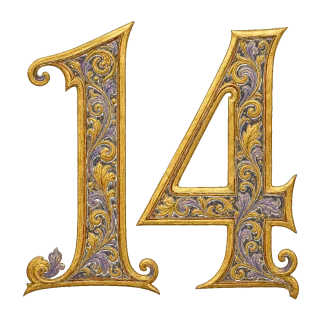
The debt of freedom and moderation
14/5 asks you to handle freedom wisely. The pull is toward excess, restlessness, and overindulgence — too much change, too fast. The lesson is balance: enjoy variety and adventure without letting impulse run the show, and build self-control around your appetites.
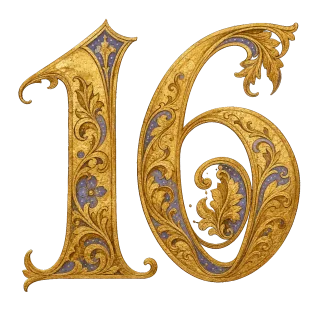
The debt of ego and rebirth
16/7 brings sudden change that strips away what the ego over-built — pride, illusion, or a love placed on a pedestal. It can feel like collapse, but it clears the way for a deeper, more honest connection to yourself. The lesson is humility, and rebuilding on truth rather than image.

The debt of independence and self-reliance
19/1 asks you to stand on your own without standing on others. The old pattern is selfishness, dependence, or refusing help while also refusing to give it. The lesson is healthy independence — leading without dominating, and learning that asking for support is strength, not weakness.
How karmic debt is detected
A karmic debt isn’t read from your final, reduced number, it’s read from the step just before it. We look at two core numbers, your life path number and your destiny (expression) number, and watch how each one reduces down to a single digit:
- Life Path. Every digit of your birth date is added together. If that running total passes through 13, 14, 16, or 19 on its way to a single digit, that debt is present.
- Expression. Each letter of your full birth name is converted to a number (A=1, B=2 … using the Pythagorean system) and summed. Again, if the reduction lands on 13, 14, 16, or 19, the debt shows up.
For example, a birth name summing to 19 → 10 → 1 carries the 19/1 debt, because the chain passes through 19. A date summing to 31 → 4 carries no debt (even though it ends on a 4) because it never touches one of the four karmic totals. That’s the whole test: the final root tells you who you are, but the rung above it is where a karmic debt hides.
Questions about karmic debt numbers
What is a karmic debt number?
A karmic debt number is one of four specific totals (13, 14, 16, or 19) that a core numerology number passes through on its way down to a single digit. It is read as an unfinished lesson carried into this life, and the number names the kind of work to do: focus (13), moderation (14), humility (16), or self-reliance (19).
How do you know if you have a karmic debt number?
Look at the reduction of your Life Path (the sum of all your birth-date digits) and your Expression (the Pythagorean letter sum of your full birth name). If either total lands on 13, 14, 16, or 19 before reducing to a single digit, that karmic debt is present. This tool checks both for you automatically.
Why are only 13, 14, 16, and 19 karmic debt numbers?
In numerology these four two-digit numbers each reduce to a root (13/4, 14/5, 16/7, 19/1) and carry a traditional shadow meaning tied to misused energy in a past frame. Other two-digit steps in a reduction (like 10, 12, 15, or 17) are treated as ordinary and carry no debt.
Is having a karmic debt number bad?
No. A karmic debt is not a punishment, it is a theme to grow through. The number simply points to where extra effort, balance, or honesty pays off. Many people with no karmic debt number still face the same lessons; the debt just makes that lesson a more central thread.
What if I have no karmic debt number?
Most people do not carry one, and that is a completely positive result. It means your core numbers reduce cleanly without passing through 13, 14, 16, or 19, your growth simply isn't anchored to one of these four specific lessons.
Related numerology tools
Karmic debt is one thread in a fuller numerology profile. See how it sits beside these: Life Path Number · Destiny Number · Pinnacle Numbers · Personal Year · Numerology

Weekly cosmic weather for your people
One short email every Monday: what the week's sky holds for you and the people you love.
No spam. Unsubscribe anytime.