The rising sign
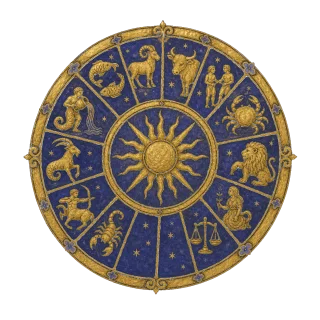
The rising sign (also called the ascendant) is the zodiac sign that was climbing over the eastern horizon at the exact moment and place you were born. While your Sun sign answers “where was the Sun?”, your rising sign answers a different question: “which constellation was literally rising into view as you arrived?”

It’s the edge of the Earth, from where you stood
Picture yourself standing at your birthplace, looking due east at the moment you were born. The horizon line in front of you cuts the sky in two: everything above it is visible, everything below it is hidden by the curve of the Earth. Whichever zodiac constellation happened to be sitting right on that eastern edge (about to rise into view) is your rising sign.
The Sun sign is about where a planet was. The rising sign is about which way you were facing, the slice of sky the spinning Earth had turned you toward.
Mira’s rising sign is Pisces
Where the Sun sign describes something internal (the core of who you are) many astrologers read the rising sign as your outward manner: how you come across before anyone knows you, the first impression you make, the lens through which you meet the world. It’s the front door of the chart.
Mira has a bold Leo Sun, warm, expressive, wanting to be seen. But her rising sign is Pisces, and Pisces rising tends to read as gentle, dreamy, and receptive: a soft, almost watery first impression that doesn’t announce itself. Same person, two different layers. People often meet the Pisces rising, quiet, attentive, a little mysterious, long before they meet the Leo Sun blazing underneath.
Why it changes every two hours
Here is the mechanic that makes the rising sign special. The Earth does two separate motions at once. It orbits the Sun once a year, the slow journey that decides where the Sun and planets appear, and therefore your Sun sign, Venus sign, and the rest. But the Earth also rotates on its own axis, one full turn every twenty-four hours, and that is what drives the rising sign.
Twelve signs, twenty-four hours: that’s about two hours per sign. This is why astrologers insist on your birth time. Get the date wrong and your Sun sign barely budges. Get the time wrong by a couple of hours and your rising sign can land on an entirely different constellation.
A thought experiment
To feel how the rising sign comes from where you stand rather than when, imagine two babies born at the very same instant.
Their charts are almost identical, the same planets sit in the same signs, because the Sun and planets haven’t moved. But they face opposite horizons, so their rising signs are completely different. Same sky, opposite doorways into it.
Two babies born in the same city but two hours apart share nearly every placement, yet the Earth has rotated just enough that the horizon has slid forward, so their rising signs are usually one sign apart.

The third pillar
Most people who read charts start with three placements, and you now understand all three: the Sun (your core), the Moon (your inner emotional world), and the rising sign (how you meet the world). Together they’re often called the “big three”, the quick sketch of a chart before you fill in every planet and house.
Mira’s big three
The sketch so far
With her rising sign in place, Mira’s opening portrait is complete. A Leo heart, a Sagittarius inner world, met through a soft Pisces first impression. The chapters ahead add the rest of her planets and the houses they live in, but the big three already tell you most of the story.
Frequently asked questions about rising sign
What is a rising sign (ascendant)?
Your rising sign — also called the ascendant — is the zodiac sign that was climbing over the eastern horizon at the exact moment and place you were born. Where the Sun sign answers "where was the Sun?", the rising sign answers "which constellation was literally rising into view as you arrived?" Many astrologers read it as your outward manner — the first impression you make.
Why does the rising sign change every two hours?
The rising sign comes from Earth's daily rotation, not its yearly orbit. One full rotation sweeps all twelve signs past the eastern horizon in 24 hours — twelve signs over twenty-four hours works out to about two hours per sign. That's why birth time matters so much: get the time wrong by a couple of hours and your rising sign can land on an entirely different constellation.
How is the rising sign different from the sun sign?
The Sun sign is about where a planet was — set by Earth's yearly orbit. The rising sign is about which way you were facing — the slice of sky Earth's spin had turned you toward at your birthplace. So the Sun sign describes your core self, while the rising sign describes how you come across before anyone knows you: the front door of the chart.
What are the big three in astrology?
The big three are the Sun (your core), the Moon (your inner emotional world), and the rising sign (how you meet the world). Together they're the quick sketch of a chart before you fill in every planet and house — often most of someone's story in three placements.