The birth chart
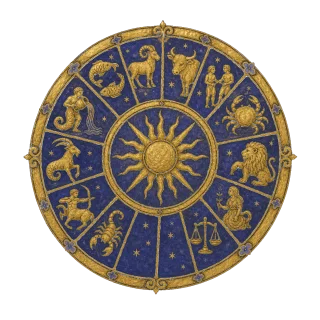
A birth chart (also called a natal chart) is a map of the sky at the exact moment and place you were born. Strip away the meaning and it is pure astronomy: the precise positions of the Sun, Moon and planets at one instant, drawn as you would have seen them looking up from your particular spot on Earth. Astrology is the layer we add on top, the reading of that map.

It is a snapshot of one moment
The sky is always moving. The Moon shifts roughly its own width every hour; the planets crawl through the zodiac over months and years. Freeze all of it at one instant (the minute you took your first breath) and note where everything was, and you have your chart. Change the time by a few hours, or the place by a few thousand miles, and the picture changes. That is why a chart needs a date, a time and a place: it is genuinely a photograph of your sky, not anyone else’s.
Two people born the same day share their Sun sign, but only someone born the same minute, in the same place, shares the whole sky.
How the wheel is drawn
The chart is laid out as a circle because it represents the full ring of the zodiac wrapped all the way around you. As we saw in the last chapter, from Earth every planet always appears to stand in front of one of the twelve zodiac constellations. So drawing a chart is mostly bookkeeping: for each planet, note which constellation it was sitting in front of, and mark it on the wheel at that spot.
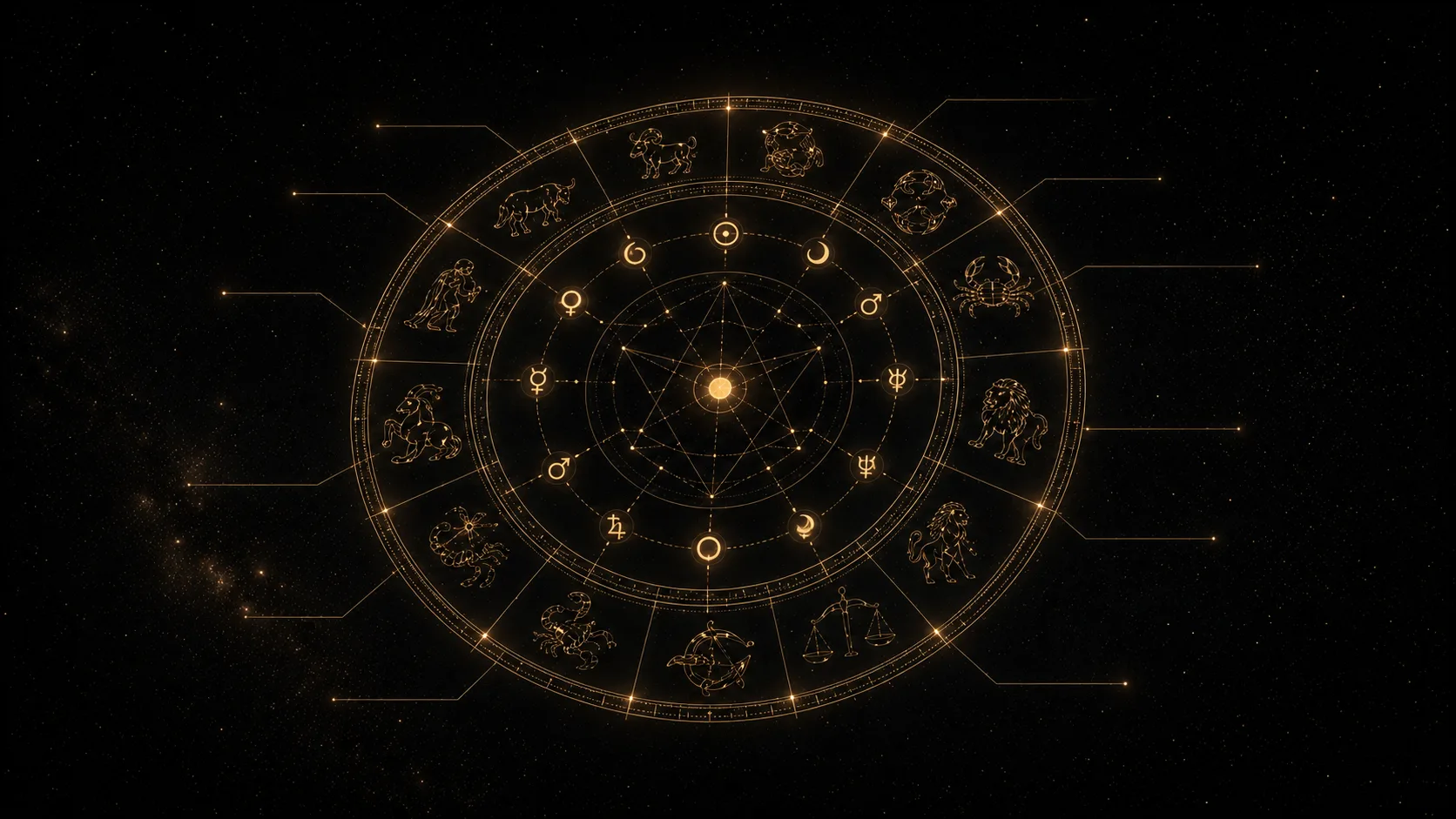
The little symbols you see scattered around a chart are simply glyphs, shorthand drawings for each planet (☉ Sun, ☽ Moon, ♀ Venus, ♂ Mars, and so on) and each sign. Once you know that the symbols are the planets and the ring behind them is the signs, a chart stops looking like a secret diagram and starts looking like what it is: a labelled star map.
The grammar of astrology
Here is the whole engine for reading a chart, and it is smaller than people expect. Astrology works like a sentence with three parts of speech. Learn these three and you can read any placement in any chart.
Planets are verbs
A planet tells you what is happening, the action, the drive, the function inside you. Each planet governs one verb. This is the part of speech that does the doing.
Signs are adverbs
A sign never acts on its own, it modifies the planet sitting in front of it. It tells you the style, the flavour, the how. The same verb performed in two different signs feels like two different people.
Those are just four of the twelve, enough to see the pattern: a sign is always an -ly word attached to whatever planet stands in front of it. Each of the twelve signs earns its own chapter later; for now, hold onto the shape.
Houses are the setting
The third part of speech is the houses, the twelve slices of the wheel that work like nouns, the where of the sentence. A house tells you which arena of life a placement shows up in: love and creativity, work, home, money, friendship. Houses have a chapter of their own coming up, so we’ll keep them light here, but you need them for the worked example below.
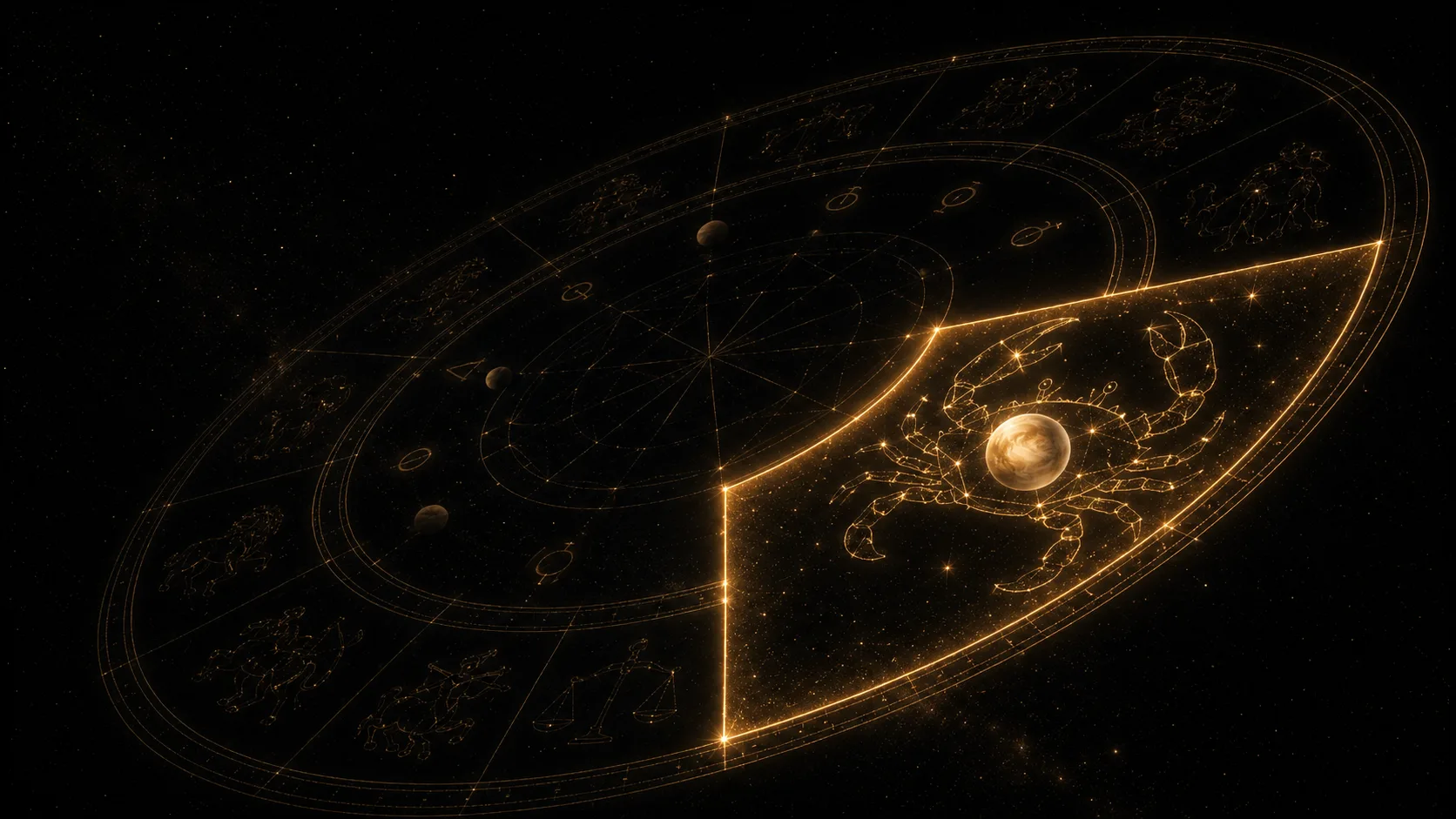
Drag to look around Venus, the planet of love and value. This is the real planet; where it sat in Mira’s sky is what we read next.
Reading one line of Mira’s chart
Let’s put the grammar to work on a real placement from Mira’s chart. In her sky, Venus sits in Cancer, in her 5th house. Three parts of speech, one sentence:
That is a whole sentence about how Mira loves, pulled directly from where a planet happened to be the minute she was born. You can do the same with her Sun in Leo: the Sun is I am, Leo is boldly, so at her core Mira is fundamentally bold, warm and proud. No interpretation required beyond the grammar.
You can already read a chart
Here is the quiet truth of this chapter: planet + sign already lets you read a chart. Find a planet, name its verb, name the sign’s adverb, and you have a real, true line about a person. The houses simply add the where, the room in the house of a life that the action unfolds in. We’ll give them their own chapter next. But the engine is already in your hands.
Following one real chart
Mira’s sky
Everything above is genuine, Mira was born at 9:47 PM on August 2, 1998, in Lisbon, and we calculated her chart with Luune’s own engine. That Venus in Cancer is really hers. Here are the three placements people feel first; we’ll keep reading her sky chapter by chapter.
Frequently asked questions about birth chart
What is a birth chart?
A birth chart — also called a natal chart — is a map of the sky at the exact moment and place you were born. Strip away the meaning and it's pure astronomy: the precise positions of the Sun, Moon, and planets at one instant, drawn as you'd have seen them looking up from your spot on Earth.
Why do you need an exact birth time and place for a natal chart?
Because a chart is genuinely a photograph of your sky, not anyone else's. The Moon shifts roughly its own width every hour and the rising sign changes with the spot you're standing on, so change the time by a few hours or the place by a few thousand miles and the picture changes. Two people born the same day share a Sun sign, but only someone born the same minute in the same place shares the whole sky.
What are the symbols on a birth chart?
The little symbols scattered around a chart are glyphs — shorthand drawings for each planet (☉ Sun, ☽ Moon, ♀ Venus, ♂ Mars, and so on) and each sign. The outer ring is the twelve signs; the symbols dotted around it are the planets. Once you know that, a chart stops looking like a secret diagram and starts looking like a labelled star map.
What do planets, signs, and houses mean in a chart?
They're the three parts of speech of astrology. Planets are verbs (what is happening — the Sun is "I am," Venus is "I love"), signs are adverbs (the style or how — Cancer is protectively), and houses are nouns (the where — the 5th house is romance, creativity, and play). Put together they make a sentence: Venus in Cancer in the 5th reads as "I love protectively and tenderly, through romance and play."