What is astrology?
Astrology and astronomy were a single discipline for thousands of years. Until the 1700s, studying how the stars move (what we now call astronomy) and studying what the stars mean (what we now call astrology) were the same study. Astrology places one human life inside the context of an enormous, endlessly moving universe.
We begin with astronomy
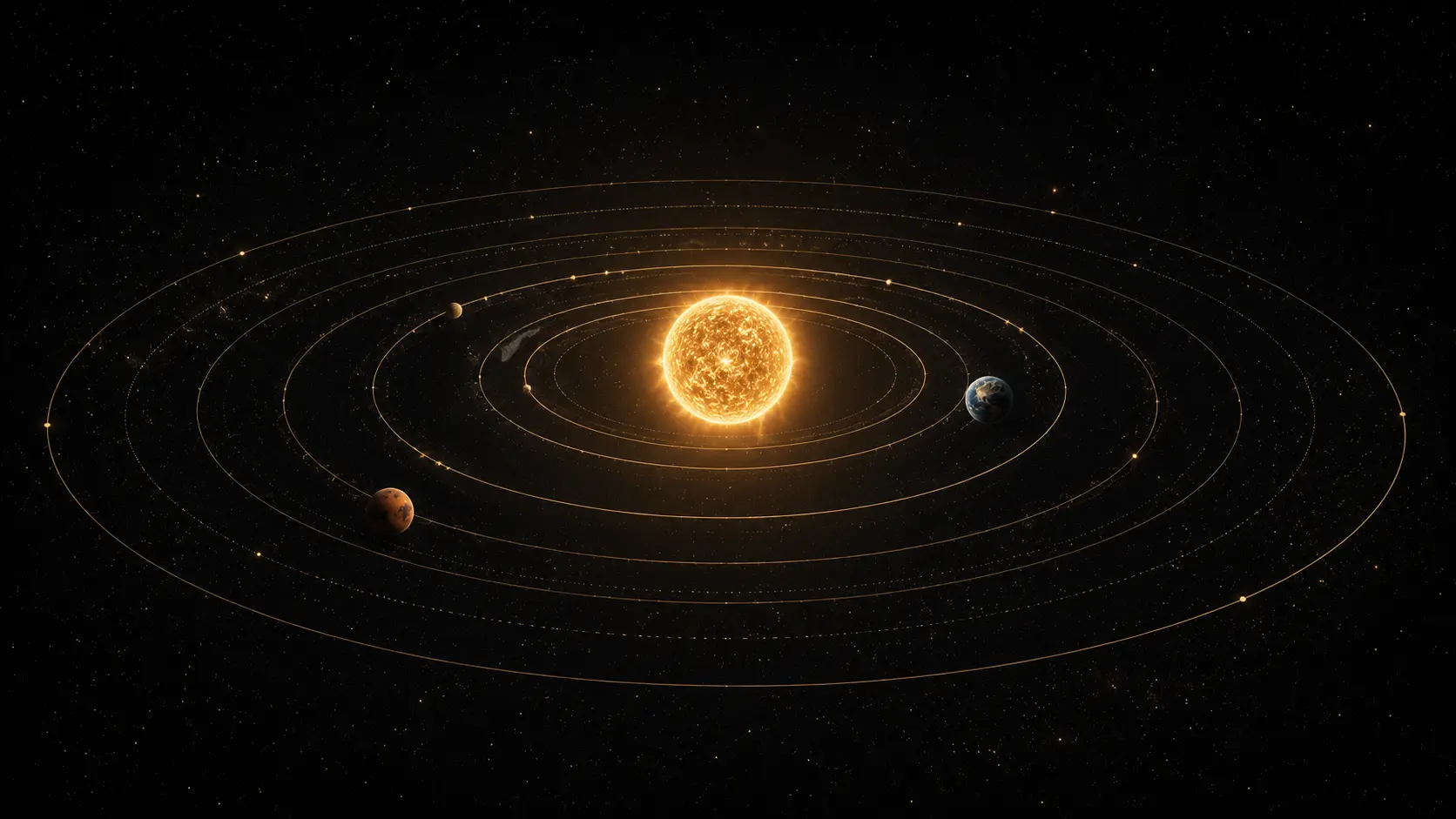
In school, you were taught that the Sun sits at the center of the solar system, with Earth and the other planets orbiting around it. This is the heliocentric model, “helio” for the Sun at the center.
But until the 1500s, humans placed Earth at the center, with the Sun and planets circling us. This is the geocentric model, “geo” for Earth at the center.
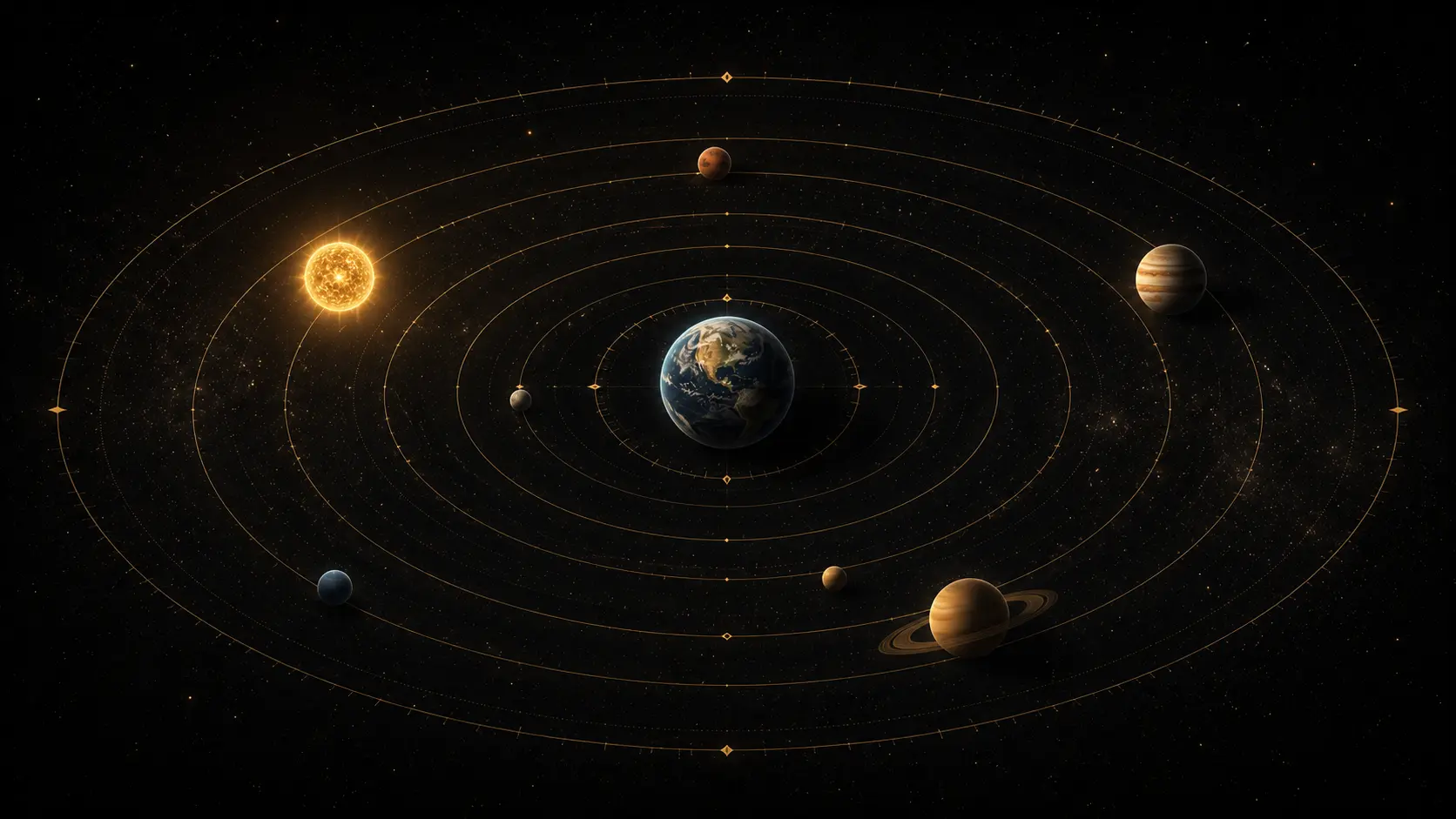
Here’s the part most people never hear: both models correctly describe the motion we observe. The heliocentric model is what you’d see standing on the Sun. The geocentric model is what you actually see standing here, looking up. They’re two true descriptions from two different points of view.
Astrology simply chooses the view from Earth, because that’s where you were standing when you were born.
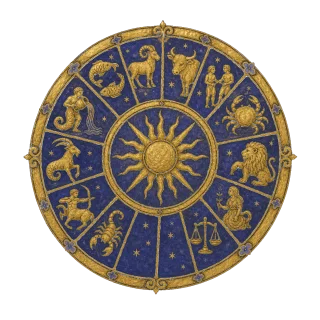
The zodiac is a ring of constellations
From Earth, the Sun and planets all appear to travel along roughly the same path across the sky. The band of constellations sitting along that path is the zodiac. There are dozens of other constellations in the sky, but these twelve are the ones the planets appear to move through.
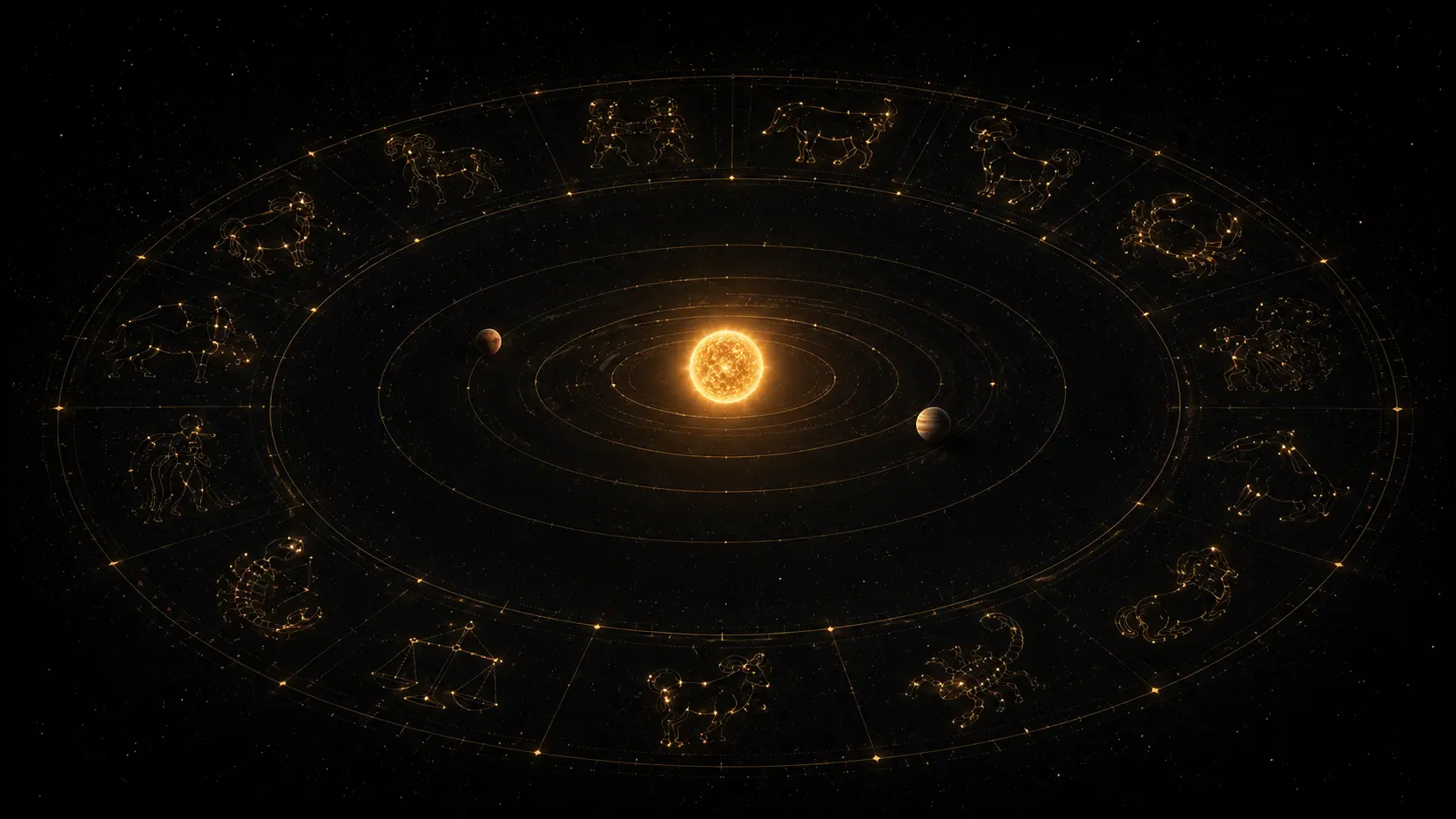
From our point of view on Earth, each planet always appears to sit in front of one of these constellations. Over days or months (depending on how fast the planet moves) it drifts across the sky, appearing in front of first one zodiac sign, then the next. Once it has passed through all twelve, it has completed a full circle and starts again.
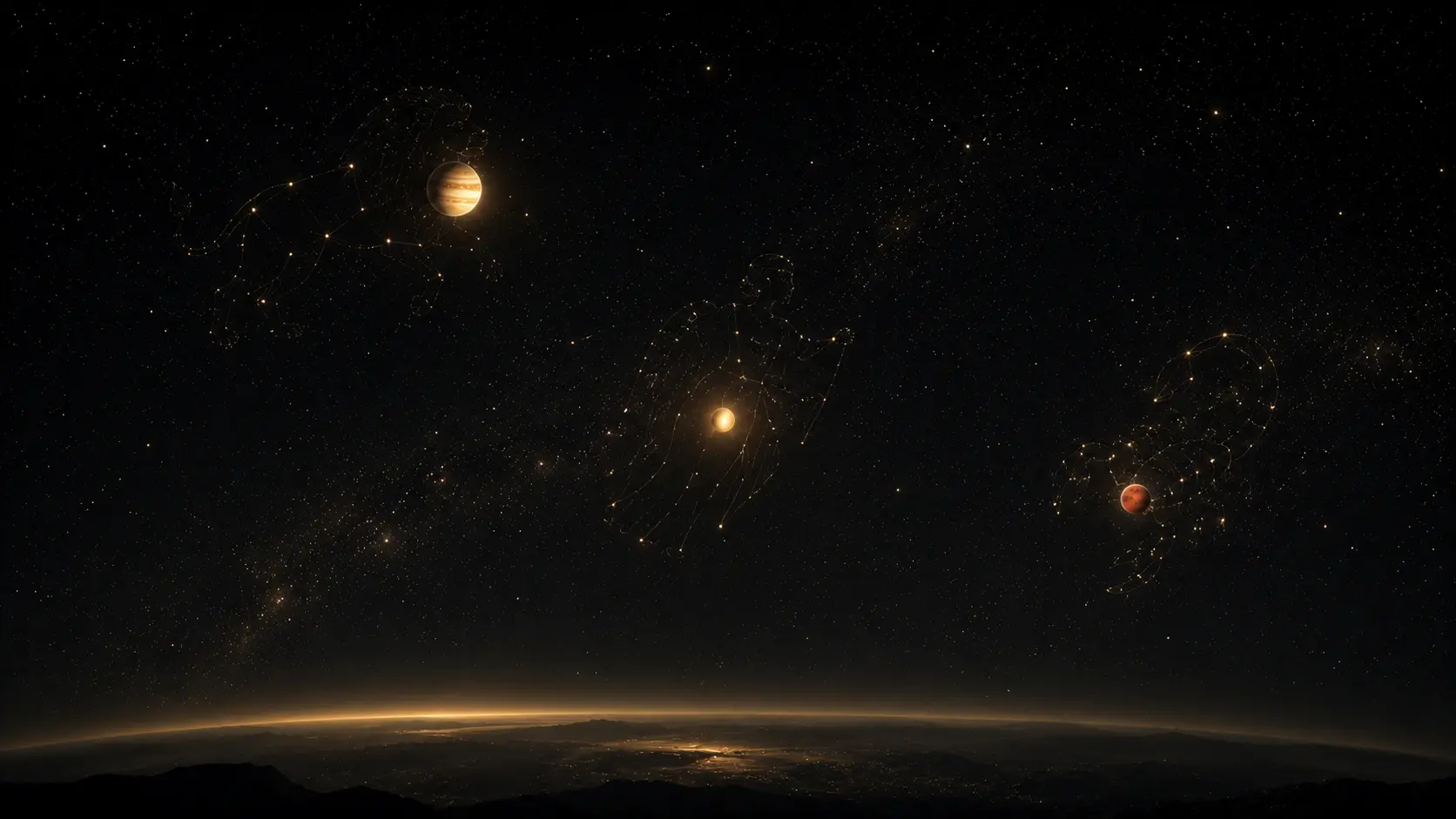
Drag to look around. This is real astronomy, the same Sun anyone at NASA would recognize. Astrology is the layer of meaning we lay on top of it.
Astrology is the layer of meaning
Everything so far is plain astronomy. The leap astrology makes is to assign meaning to each pairing of a planet and the sign it’s standing in front of. The trick to reading any chart is a tiny piece of grammar:
That’s the whole engine. Later chapters add a third part of speech (the houses, which work like nouns and tell you where in life it all plays out) but planet + sign is enough to start reading.
Where it came from
Astrology is one of the oldest things humans have written down. The earliest records come from Babylon, more than two and a half thousand years ago, where priests kept meticulous logs of where the planets were and what happened on Earth afterward. From there it travelled to Greece, where it absorbed Greek geometry and philosophy, then through the Islamic Golden Age (which preserved and sharpened it) and into medieval Europe. For most of that history, the same scholar who charted a comet would also read its meaning; the split into “astronomy” and “astrology” we treat as obvious is only a few centuries old.
Is astrology “real”?
It’s the honest question, so let’s answer it honestly. The astronomy is unambiguously real: the planets are exactly where astrology says they are, moving exactly as it says they move, that part is just physics. What astrology adds on top is meaning, and meaning isn’t the kind of thing a telescope can confirm or deny. There’s no known physical force by which a distant planet could press on your personality.
So we don’t ask you to take it as physics. Think of astrology instead as a language for self-reflection, a rich, centuries-old vocabulary for noticing patterns in yourself and the people around you, and for asking better questions. Its real value isn’t prediction; it’s the same value a good story or a thoughtful conversation has, it gives you a frame, and the frame helps you see.
You don’t have to believe the planets cause anything to find the chart useful. A map isn’t the territory, but a good map still helps you find your way.
Your guide through this book
Meet Mira
Rather than abstract definitions, we’ll follow one real chart through every chapter. Meet Mira, born at 9:47 PM on August 2, 1998, in Lisbon. Her chart is genuine (we calculated it with Luune’s own engine) and that Mars in Cancer above is hers. Each idea you learn, you’ll watch play out in her sky.
Frequently asked questions about what is astrology?
What is the difference between astrology and astronomy?
They were a single discipline for thousands of years and only split around the 1700s. Astronomy studies how the stars and planets move; astrology is the layer of meaning laid on top of that same motion. The astronomy underneath astrology — the Sun, Moon, and planets moving through the zodiac — is exactly what anyone at NASA would recognize.
Is astrology based on a geocentric or heliocentric model?
Astrology uses the geocentric (Earth-centered) view, because that's where you were standing when you were born. Both the geocentric and heliocentric models correctly describe the motion we observe — they're two true descriptions from different points of view. Astrology simply chooses the view from Earth, looking up.
What is the zodiac?
The zodiac is the band of twelve constellations sitting along the path the Sun and planets appear to travel across the sky. There are dozens of other constellations, but these twelve are the ones the planets move through — so from Earth, each planet always appears to sit in front of one of them.
How do you actually read an astrology chart?
It comes down to a tiny piece of grammar: planets are verbs (Mars is how you take action), signs are adverbs (Cancer means protectively, tenderly), so Mars in Cancer reads as "I take action protectively, by looking after the people I love." Later you add the houses — the nouns, the where — but planet plus sign is already enough to start reading.
Is astrology real?
The astronomy underneath it is unambiguously real — the planets are exactly where astrology says they are. What astrology adds on top is meaning, which isn't the kind of thing a telescope can confirm or deny, and there's no known physical force by which a distant planet could press on your personality. So it's best understood not as physics but as a centuries-old language for self-reflection: a vocabulary for noticing patterns in yourself and asking better questions. You don't have to believe the planets cause anything to find the chart useful.
Where did astrology come from?
Astrology is one of the oldest recorded human practices. The earliest records come from Babylon more than two and a half thousand years ago, where priests logged the positions of the planets and what happened afterward. It travelled to Greece, absorbing Greek geometry and philosophy, then through the Islamic Golden Age and into medieval Europe. For most of that history astronomy and astrology were a single study; the split is only a few centuries old.