Transits & orbs
Your birth chart is frozen at one instant, the moment you took your first breath. But the real planets never stopped moving. Right now, overhead, they are still turning through the zodiac. A transit is what happens when one of those moving planets forms an aspect to a planet sitting in your fixed birth chart. Transits are how today’s sky talks to the chart you were born with.

The sky is still moving
Think of your birth chart as a photograph and the real sky as the film still rolling. Lay the photograph over the live footage and watch for the moments they line up. When the Mars in the sky today reaches the same degree as the Venus in your birth chart, that’s a transit, transiting Mars conjunct your natal Venus. The aspects you learned in the previous chapter (conjunction, square, trine, opposition) are exactly the angles that count here, only now one side of the angle is a planet that is genuinely moving across the sky as you read this.
Every daily and weekly horoscope you have ever read is, underneath, a list of the transits happening to a chart right now.
Each planet keeps its own clock
Because every planet moves at a different speed, transits arrive on different rhythms. The fast inner bodies sweep past your placements constantly; the slow outer ones take years to come around, which is exactly why they feel so weighty when they do.
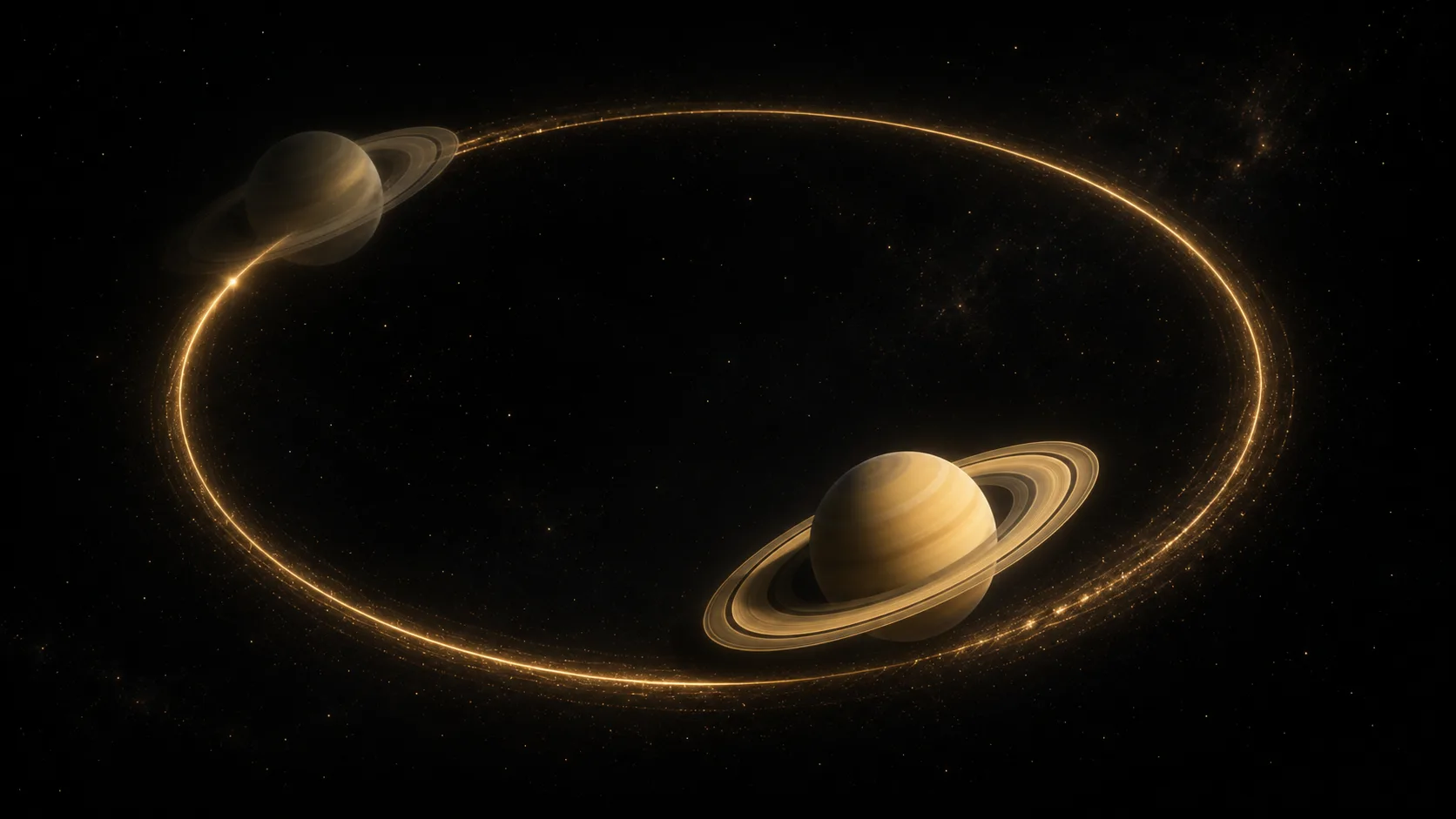
Take Mira, born on August 2. Once a year, in early August, the transiting Sun returns to the exact Leo degree of her natal Sun, her solar return, the astrological event we all celebrate without knowing its name. Slower bodies are rarer guests. The most famous of all is the Saturn return: around age 29, transiting Saturn completes its first full lap and arrives back on the Saturn you were born with. Astrologers treat it as a genuine rite of passage, the threshold where you stop rehearsing adulthood and start living it. Mira’s first Saturn return lands around 2027.
Orbs: how close is close enough?
A transit is mathematically exact for only a single instant, the moment the moving planet hits the precise degree. That would make transits impossibly brief to talk about, so astrologers use an orb: a buffer of a few degrees on either side of exact, inside which the transit is considered “in effect.”
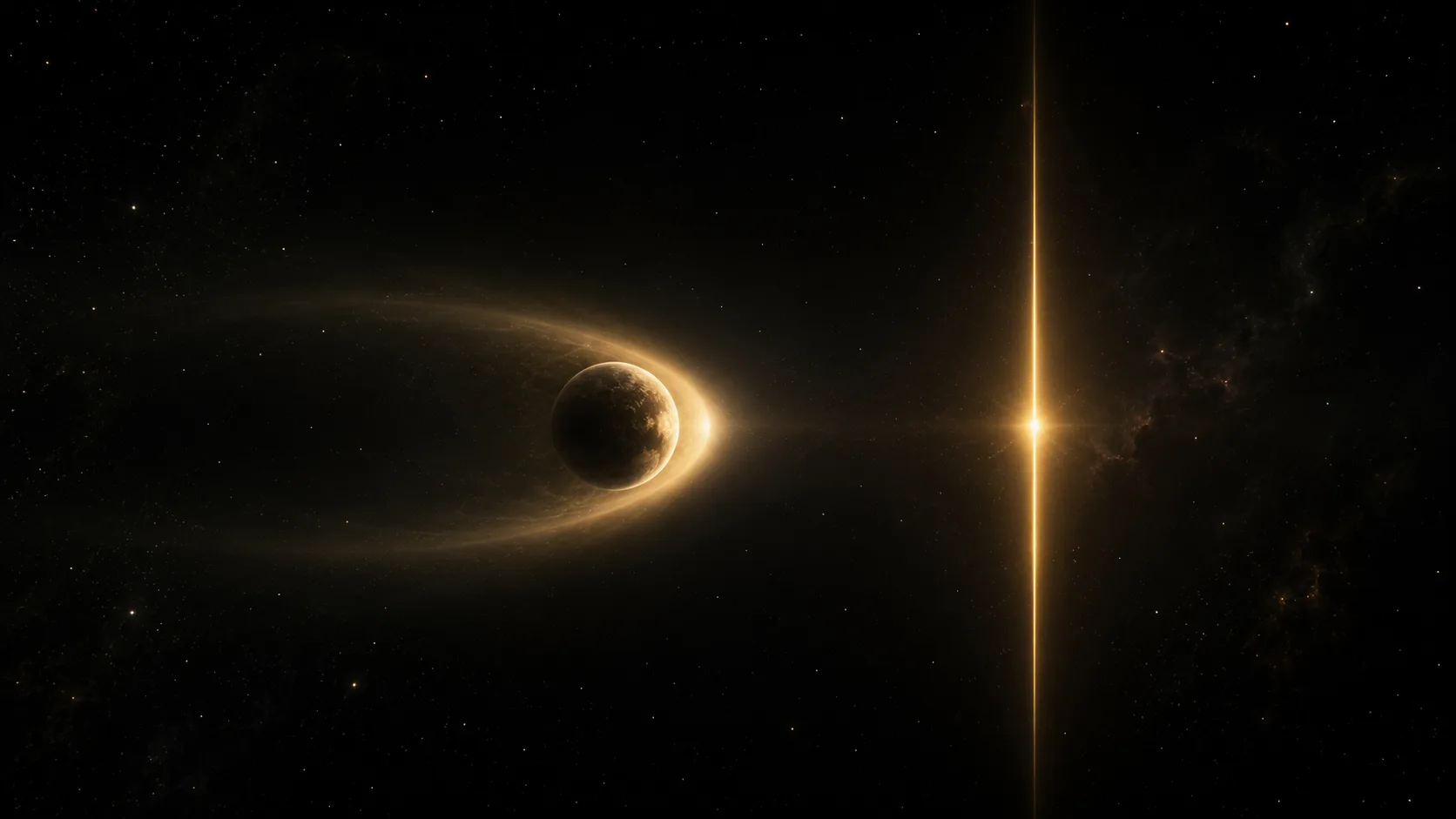
The transit switches on as the planet enters the orb, peaks at exact, and fades as it leaves.
There is no single agreed number. Different astrologers use orbs anywhere from about 1° to 8°. The choice changes the experience: a wide orb means you feel a transit building well before it’s exact and lingering long after, while a tight orb keeps it brief and sharp. It’s less a fact about the sky than a decision about how much of a planet’s approach you want to count.
This is what Luune is watching
Everything in this chapter is what happens behind your daily horoscope. Luune keeps your birth chart on one side and the real, live sky on the other, and tracks (in real time) every moment the moving planets form an aspect to your own. When something lands within orb, that’s the transit your reading is describing. Open today’s sky and you’re looking at the present positions being measured against the chart you were born with.
And with that, you have the whole grammar. Planets are the verbs, signs are the adverbs, houses are the rooms where it plays out, aspects are the conversations between planets, and transits set all of it in motion through time. Your chart was never a fixed verdict. It’s a living instrument, and the sky is still playing it. You now know how to listen.
Frequently asked questions about transits & orbs
What is a transit in astrology?
A transit is what happens when one of the real, still-moving planets overhead forms an aspect to a planet sitting in your fixed birth chart. Your chart is frozen at the moment you were born, but the sky keeps rolling — when transiting Mars reaches the degree of your natal Venus, that's a transit. It's how today's sky talks to the chart you were born with.
Are horoscopes based on transits?
Yes. Every daily and weekly horoscope you've ever read is, underneath, a list of the transits happening to a chart right now. Luune keeps your birth chart on one side and the live sky on the other and tracks, in real time, every moment a moving planet forms an aspect to your own — and that's what your reading describes.
What is a Saturn return?
A Saturn return is the transit when, around age 29, transiting Saturn completes its first full lap of the zodiac (about 29 years) and arrives back on the Saturn you were born with. Astrologers treat it as a genuine rite of passage — the threshold where you stop rehearsing adulthood and start living it. The yearly version with the Sun is your solar return, also known as your birthday.
How long does a transit last?
A transit is mathematically exact for only a single instant, so astrologers use an orb — a buffer of a few degrees of approach and separation within which it's "in effect." There's no single agreed number; orbs range from about 1° to 8°. A wide orb means you feel a transit building well before exact and lingering after; a tight orb keeps it brief and sharp.