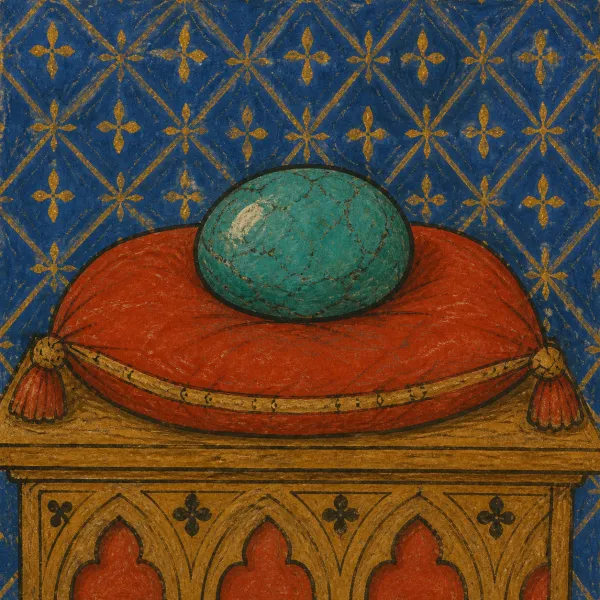
Turquoise
Turquoise — the warm sky-blue of an ancient protective stone; a gem of luck, friendship, and safe keeping.
The December birthstone: Turquoise
December's classic birthstone is turquoise, one of the oldest gems humans have ever worn — and one of the few prized not for transparency or fire but for a single, instantly recognisable colour: a warm robin's-egg blue, sometimes leaning green, often webbed with the dark veins of its host rock. Against the grey of the year's last, coldest month, that piece of summer sky is exactly the point. December's alternates, the violet-blue tanzanite and the brilliant blue zircon, are lovely but newer; turquoise is the ancient heart of the month.
Turquoise has been treasured for at least seven thousand years, from the pharaohs of Egypt — who set it in Tutankhamun's burial mask — to the Persians, who domed their mosques in it, to the Navajo and Pueblo peoples of the American Southwest, for whom it remains sacred. Across all these cultures it carried the same core meaning: protection. It was the stone that guarded travellers and warriors, that was believed to change colour to warn of danger or illness, and that, given as a gift, conferred luck and lasting friendship.
Turquoise is a copper-and-aluminium mineral, and it's the copper that gives it that blue. The finest sky-blue stone historically came from Iran (ancient Persia) and from the mines of the American Southwest; the dark veining, or matrix, that runs through much of it is part of its character rather than a flaw. Because it's relatively soft and porous, turquoise has always been a stone worn and handled rather than locked away — a gem meant to be lived with.
December birthstones: modern, traditional & mystical
Different traditions assign December different stones. The modern list (set by the American jewellery trade in 1912 and the one most charts use today) sits alongside the older traditional list and the centuries-old Tibetan “mystical” list.
Meaning & symbolism
Across seven thousand years and wildly different cultures — Egyptian pharaohs, Persian mosque-builders, the Navajo and Pueblo peoples — turquoise has meant one thing above all: protection. It guarded travellers and warriors and was believed to change colour to warn of danger or illness. Given as a gift, it conferred luck and lasting friendship — which is why December's gem belongs to the one who looks after their people.
Properties & benefits believed
Turquoise is a stone of protection, luck, and friendship. It's said to guard its wearer from harm, to bring good fortune and healing, and to strengthen bonds between people — a gift of turquoise was a gift of luck. Long believed to shift colour with its owner's health or danger, it carries associations with travel, communication, and warm, faithful connection.
These are traditional and folkloric associations, the meanings cultures have attached to turquoise over centuries, not medical claims. Worn as a birthstone, it’s above all a way of carrying your month with you.
Color & origin
Turquoise is prized for its sky blue-green colour. The finest historic turquoise came from Iran (ancient Persia) and the American Southwest, where it remains sacred to the Navajo and Pueblo peoples.
Who Turquoise suits
Turquoise suits the warm and the loyal — open, generous people who collect friends and keep them. Born in the year's final, festive-yet-cold month, December people often pair an adventurous streak with a deep gift for connection. If you're the friend who protects their people, this is your stone.
The zodiac signs of December
December spans two zodiac signs, depending on where in the month you were born. Read your sign to see how its story lines up with your stone.
Frequently asked questions about Turquoise
- What is the birthstone for December?
- The birthstone for December is Turquoise — a sky blue-green gem associated with earth & protection. Turquoise — the warm sky-blue of an ancient protective stone; a gem of luck, friendship, and safe keeping.
- What does Turquoise symbolise?
- Across seven thousand years and wildly different cultures — Egyptian pharaohs, Persian mosque-builders, the Navajo and Pueblo peoples — turquoise has meant one thing above all: protection. It guarded travellers and warriors and was believed to change colour to warn of danger or illness. Given as a gift, it conferred luck and lasting friendship — which is why December's gem belongs to the one who looks after their people.
- What are the believed properties of Turquoise?
- Turquoise is a stone of protection, luck, and friendship. It's said to guard its wearer from harm, to bring good fortune and healing, and to strengthen bonds between people — a gift of turquoise was a gift of luck. Long believed to shift colour with its owner's health or danger, it carries associations with travel, communication, and warm, faithful connection.
- Which zodiac signs share December?
- December spans two zodiac signs: Sagittarius and Capricorn. Which one applies depends on your exact birth date within the month.
- Who does Turquoise suit?
- Turquoise suits the warm and the loyal — open, generous people who collect friends and keep them. Born in the year's final, festive-yet-cold month, December people often pair an adventurous streak with a deep gift for connection. If you're the friend who protects their people, this is your stone.