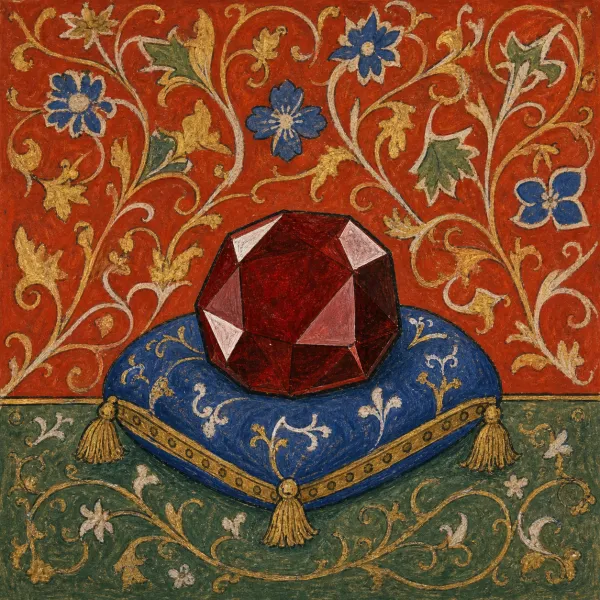
Garnet
Garnet — a deep, glowing red of constancy, protection, and the warmth that carries you through winter.
The January birthstone: Garnet
January's birthstone is the garnet, a stone whose name comes from the Latin for pomegranate seed — and once you've seen a tray of them catching the light, the comparison is obvious. Its colour is the deep, lit-from-within red of a winter ember: not the bright scarlet of a ruby but something darker and steadier, the red of dried blood, mulled wine, and the inside of a pomegranate split open in the cold.
Garnet has carried meaning for as long as people have worn stones. Ancient travellers carried it as a talisman against the dangers of the road, believing it lit the way through dark places and kept its wearer from harm. The Victorians made it the gem of devotion and enduring love, a stone you gave to say I will still be here. For a January-born soul, that symbolism fits the season: the gem of the year's coldest, most inward month is one about constancy and quiet warmth.
Though red garnet is the classic, the family runs through orange, green, and even rare blue-shifting varieties — but it's the deep crimson almandine and pyrope that the month claims. Garnets have been mined for thousands of years across Bohemia, India, Sri Lanka, and southern Africa, and were a favourite of Roman signet rings and Anglo-Saxon jewellery alike.
January birthstones: modern, traditional & mystical
Different traditions assign January different stones. The modern list (set by the American jewellery trade in 1912 and the one most charts use today) sits alongside the older traditional list and the centuries-old Tibetan “mystical” list.
Meaning & symbolism
Garnet's meaning has always circled the same idea: constancy. Travellers carried it as protection on dark roads; the Victorians made it the gem of devotion and enduring love — the stone you gave to say you'd still be there. For the year's coldest, most inward month, that reads as quiet, lasting warmth rather than show.
Properties & benefits believed
Garnet is traditionally a stone of protection, vitality, and steady energy. It's said to ground and re-charge — to pull a scattered mind back into the body, to restore drive after exhaustion, and to keep the heart constant in love and friendship. It carries associations with safe travel, courage, and the slow-burning warmth that outlasts a flashier flame.
These are traditional and folkloric associations, the meanings cultures have attached to garnet over centuries, not medical claims. Worn as a birthstone, it’s above all a way of carrying your month with you.
Color & origin
Garnet is prized for its deep red colour. Fine garnets have come from Bohemia (now the Czech Republic), India, Sri Lanka, and Africa for millennia — the Bohemian pyrope was so prized in the 1800s that whole villages cut and set it.
Who Garnet suits
Garnet suits people who run deep rather than loud — the steady ones, the ones who show up. It belongs to those born into the year's quietest, hardest month, who carry their own warmth and don't need much from outside to keep going. If you value loyalty over novelty and depth over dazzle, this is your stone.
The zodiac signs of January
January spans two zodiac signs, depending on where in the month you were born. Read your sign to see how its story lines up with your stone.
Frequently asked questions about Garnet
- What is the birthstone for January?
- The birthstone for January is Garnet — a deep red gem associated with fire & grounding. Garnet — a deep, glowing red of constancy, protection, and the warmth that carries you through winter.
- What does Garnet symbolise?
- Garnet's meaning has always circled the same idea: constancy. Travellers carried it as protection on dark roads; the Victorians made it the gem of devotion and enduring love — the stone you gave to say you'd still be there. For the year's coldest, most inward month, that reads as quiet, lasting warmth rather than show.
- What are the believed properties of Garnet?
- Garnet is traditionally a stone of protection, vitality, and steady energy. It's said to ground and re-charge — to pull a scattered mind back into the body, to restore drive after exhaustion, and to keep the heart constant in love and friendship. It carries associations with safe travel, courage, and the slow-burning warmth that outlasts a flashier flame.
- Which zodiac signs share January?
- January spans two zodiac signs: Capricorn and Aquarius. Which one applies depends on your exact birth date within the month.
- Who does Garnet suit?
- Garnet suits people who run deep rather than loud — the steady ones, the ones who show up. It belongs to those born into the year's quietest, hardest month, who carry their own warmth and don't need much from outside to keep going. If you value loyalty over novelty and depth over dazzle, this is your stone.